
Every business needs a way to track and communicate with customers—that’s why CRM software exists. It centralizes communications and supports marketing, sales, and service efforts.
Medical practices and hospitals are no exception, but they do have added complexity. HIPAA compliance and other healthcare regulations require careful handling of patient data. That’s why selecting a CRM designed for healthcare makes sense for most medical settings.
In this guide, we’ll cover the top healthcare CRM options and what to look for when choosing one.
Why healthcare organizations need a CRM built for patient relationships
The most important goal in healthcare is to create positive outcomes for patients. Extending those outcomes beyond the initial visit is one of the most powerful elements of CRM in healthcare.
Healthcare organizations often struggle with reputation—despite genuine efforts from doctors, nurses, and staff, patients arrive with specific expectations. If you’re not proactive about communication, dissatisfied patients take their frustrations online.
A healthcare CRM helps you improve the patient experience through automated, personalized messages and direct access to past communications and medical records. The result: better patient relationships and fewer surprises.
What to look for in a healthcare CRM
Before comparing specific tools, you need to understand what separates healthcare-ready CRMs from generic sales software. Here’s what matters most.
HIPAA compliance and data security
Any CRM storing sensitive patient data must support HIPAA compliance—this isn’t optional for healthcare organizations. Look for vendors that sign Business Associate Agreements (BAAs), offer role-based access controls, provide audit logging, and encrypt data both in transit and at rest.
Not every CRM vendor meets these regulatory compliance requirements, and some only offer data security features on higher pricing tiers. Verify HIPAA compliance before evaluating other features—everything else is irrelevant if the platform can’t protect sensitive patient information.
EHR and practice management integrations
A healthcare CRM should connect to your existing systems—EHR/EMR platforms, practice management software, billing tools, and scheduling applications. Without these integrations, staff end up manually transferring patient data between systems, which creates errors and wastes time.
Look for native integrations with major healthcare platforms (Epic, Cerner, athenahealth) or flexible integration tools that connect via API. The goal is centralized patient data—a single source of truth that keeps patient records accurate across every system.
Patient engagement and communication tools
Healthcare CRMs should help you communicate with patients proactively—appointment reminders, follow-up care instructions, preventive care outreach, and satisfaction surveys. The best platforms automate these touchpoints while still feeling personal.
Look for email and SMS capabilities, automation workflows, and the ability to segment patients by condition, risk level, or care needs. High-risk patients might need weekly check-ins; routine visits might just need a reminder 48 hours out. Personalized patient care at scale requires the right tools.
5 best healthcare CRM solutions for 2026
These five platforms represent a range of options—from enterprise solutions built for large hospital systems to mid-market platforms to budget-friendly starters.
1. Insightly
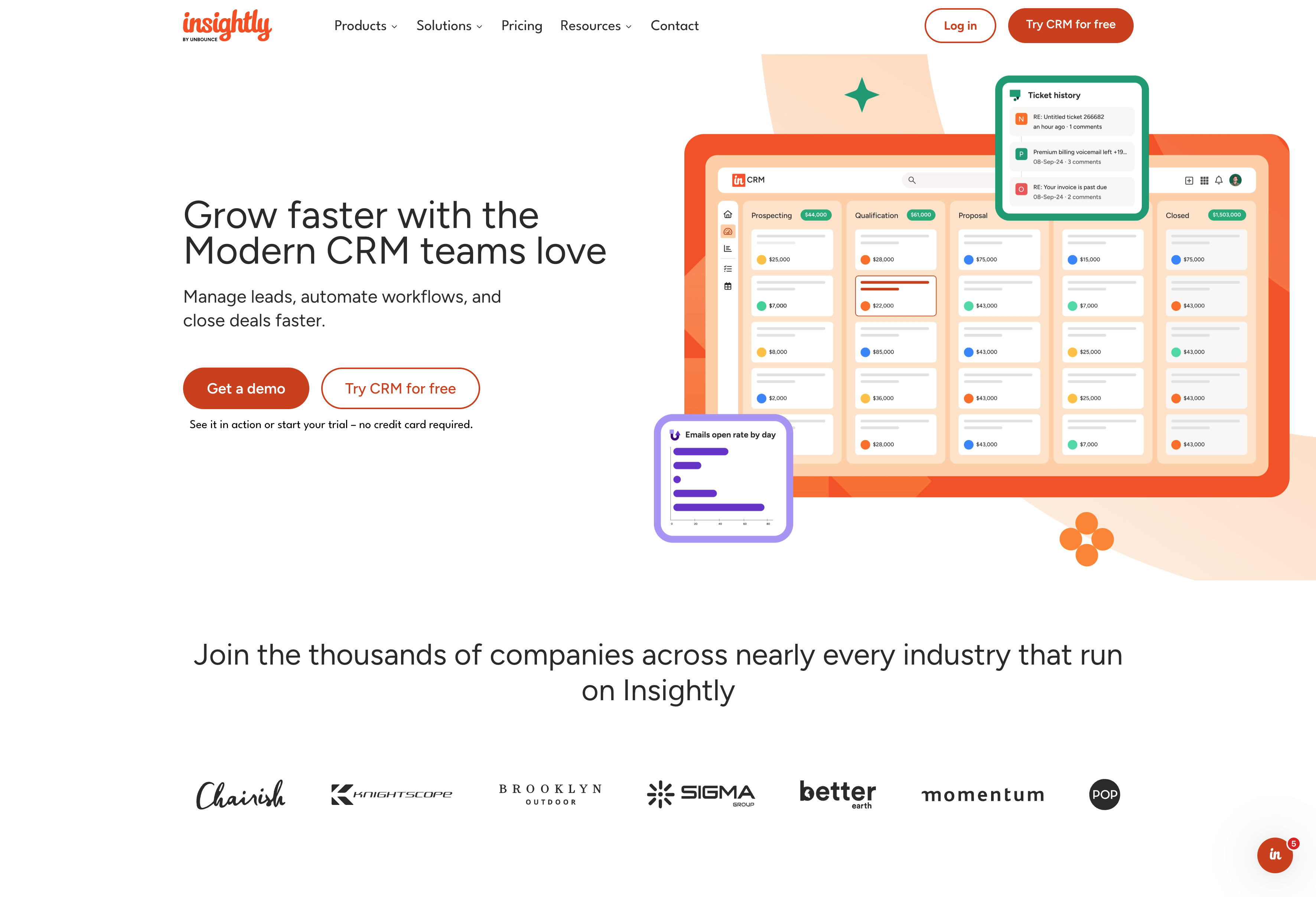
Insightly is a mid-market CRM platform that works well for healthcare organizations needing flexibility without enterprise complexity.
While it isn’t built specifically as a dedicated healthcare CRM, Insightly is general-purpose CRM platform with HIPAA compliance, strong customization capabilities, and fast implementation timelines that make it practical for medical practices and health systems across the healthcare industry.
Key features
- HIPAA-compliant with signed BAA—patient data stays protected
- AppConnect integration platform connects to 2,000+ apps including major EHR systems, so you can build integrations without developer resources
- Customizable fields, objects, and pipelines let you model healthcare-specific workflows like referral tracking, care coordination, and patient journeys
- AI Copilot allows staff to interact with CRM data using natural language, which reduces training time and improves adoption (note that AI Copilot features may not be covered within the HIPAA-compliant elements of Insightly)
- Implementation typically measured in weeks, not months
Who is Insightly best for?
Insightly fits healthcare companies that need real CRM capabilities without the complexity and cost of enterprise platforms like Salesforce Health Cloud.
Think multi-location practices, specialty clinics, ambulatory surgery centers, behavioral health providers, and regional health systems. If you need power and flexibility but can’t justify a 6-month implementation, Insightly is worth evaluating.
2. Salesforce Health Cloud
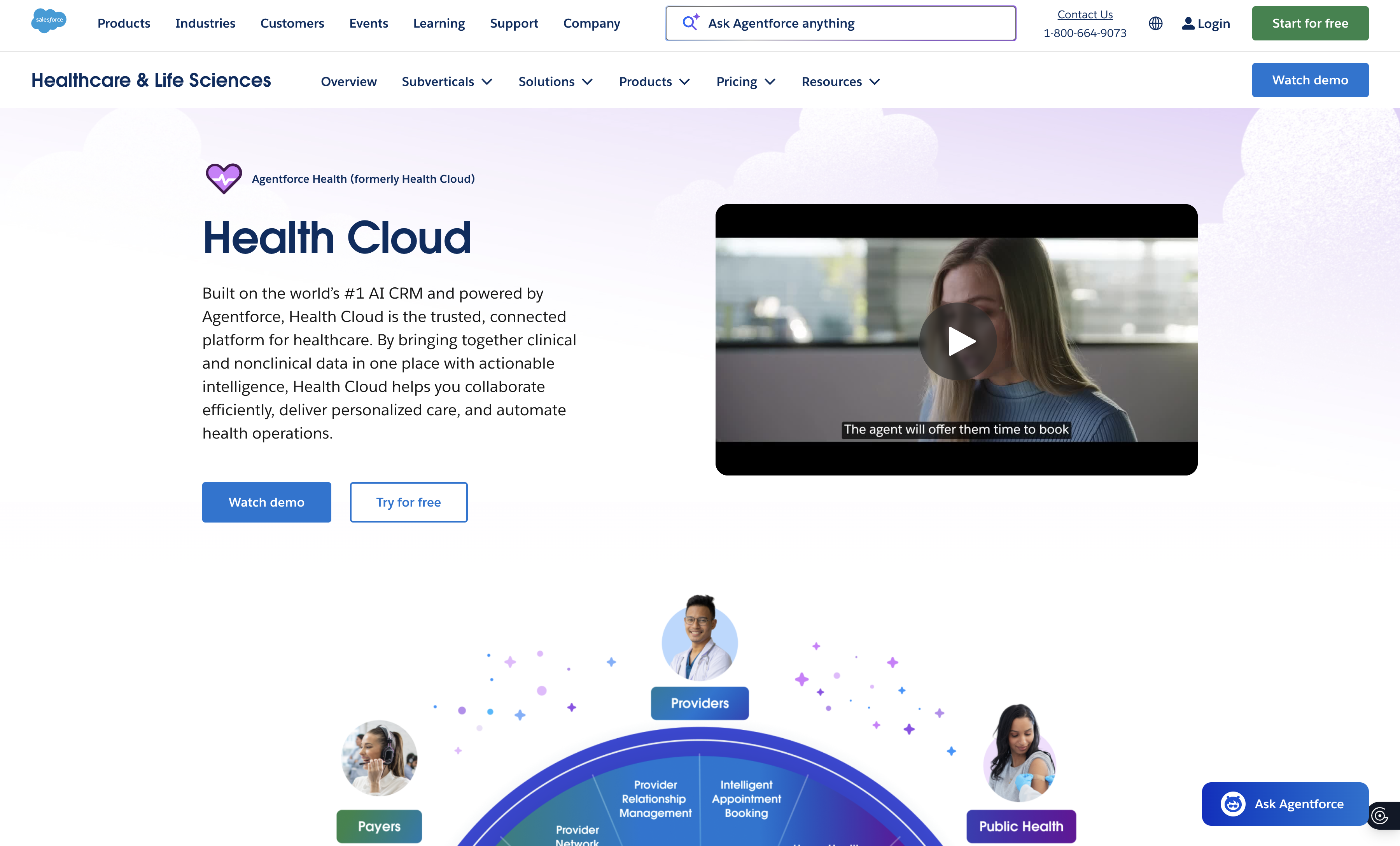
Salesforce Health Cloud is the enterprise standard for large hospital systems and health networks—purpose-built for healthcare with deep clinical workflow capabilities.
Key features
- Purpose-built healthcare data model with patient timelines, care plans, and clinical workflows
- Native integrations with major EHR platforms like Epic and Cerner
- Einstein AI for predictive analytics and risk stratification
- Extensive ecosystem of healthcare-specific apps and add-ons
- Enterprise-grade security and compliance certifications
Who is Salesforce Health Cloud best for?
Salesforce Health Cloud makes sense for large hospital systems, academic medical centers, and health networks with dedicated IT teams and implementation budgets.
The platform is powerful but complex. Expect 6-12 month implementations and ongoing consultant costs. Mid-market practices often find it’s more than they need and more than they want to manage.
Recommended reading: Salesforce vs Insightly: Which is best for you?
3. HubSpot
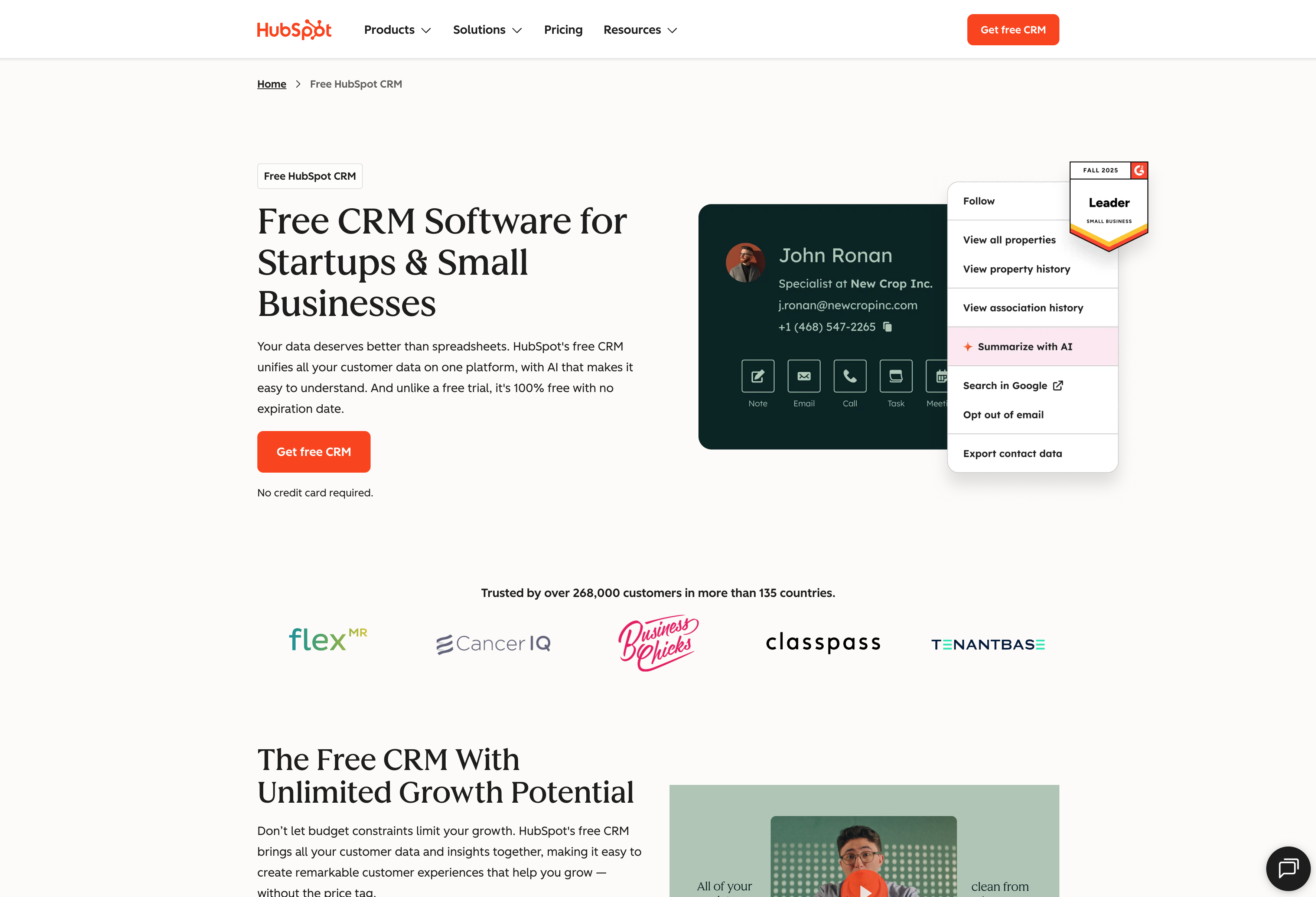
HubSpot is a popular CRM known for its marketing automation capabilities—it can work for healthcare but requires careful configuration for compliance.
Key features
- Strong marketing automation and email campaign tools—good for patient acquisition and engagement
- Free CRM tier available, though limited for healthcare use cases
- Extensive integration marketplace
- User-friendly interface that’s relatively easy for staff to learn
- HIPAA compliance requires their Enterprise tier plus additional configuration and a signed BAA—factor that into ROI calculations
Who is HubSpot best for?
HubSpot works for healthcare practices where marketing and patient acquisition are primary CRM use cases. If you’re focused on growing through digital marketing, content, and lead nurturing, HubSpot’s tools are strong. But if operational workflows and care coordination are priorities, you may find it limiting.
The jump to Enterprise pricing for HIPAA compliance is significant. Make sure to conduct a proper needs assessment before committing to make sure it’s worth it.
Recommended reading: HubSpot vs Insightly: Which is best for you?
4. Zendesk
Zendesk is primarily a customer service platform that can function as a healthcare CRM for organizations focused on patient support and communication.
Key features
- Omnichannel patient support (phone, email, chat, social) in a unified interface
- Ticketing system that works well for patient inquiries and issue tracking
- Knowledge base capabilities for patient self-service
- Strong reporting and analytics on patient interactions
- HIPAA compliance available with their Healthcare plan and signed BAA
Who is Zendesk best for?
Zendesk fits healthcare settings where patient support and service are the primary needs—telehealth companies, patient support centers, healthcare technology companies, and organizations with high-volume patient inquiries. If you need traditional CRM features like pipeline management, referral tracking, or complex care coordination, you’ll likely need a different platform. Follow CRM best practices when evaluating the fit.
Recommended reading: Zendesk vs Insightly: Which is best for you?
5. Freshsales
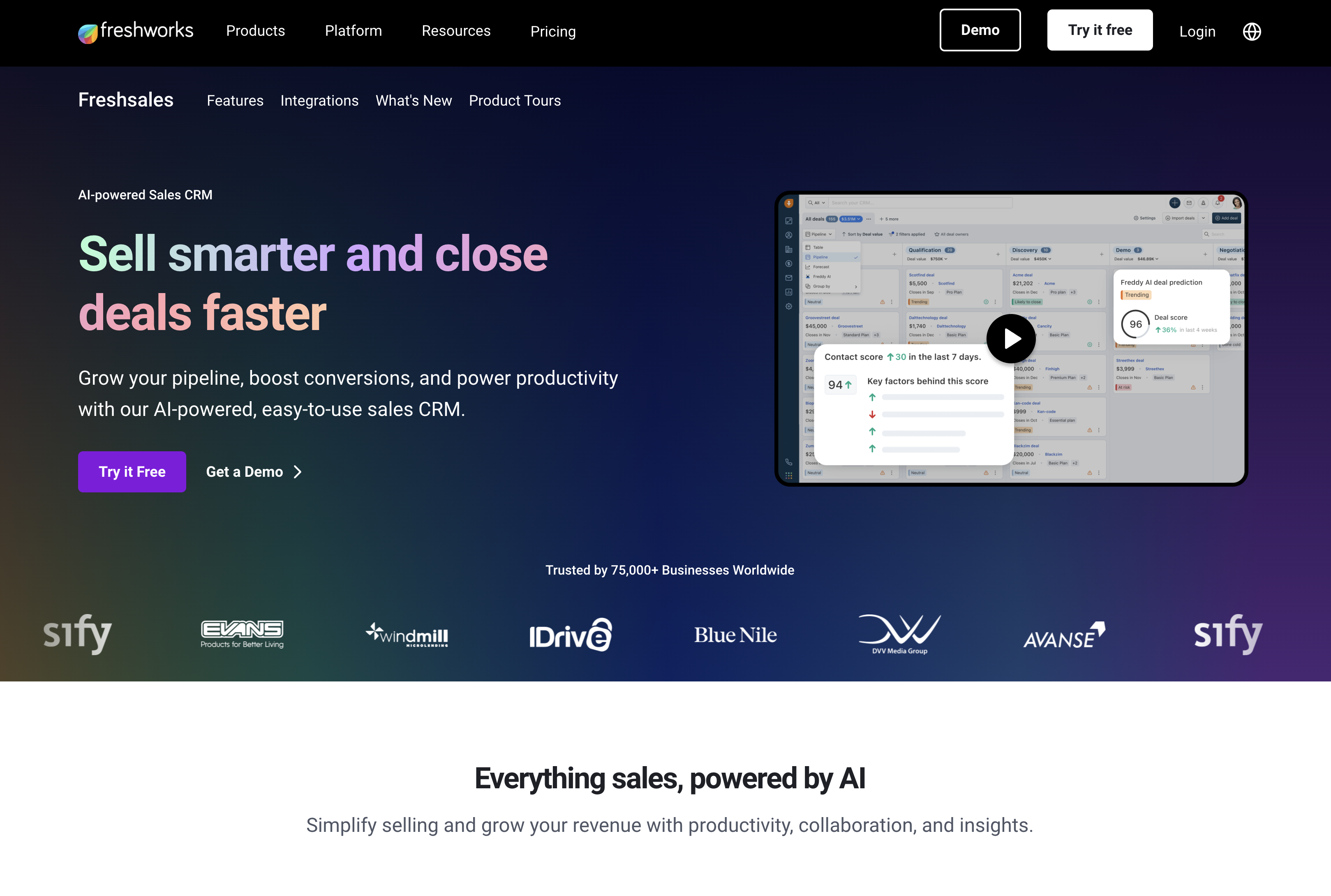
Freshsales is a budget-friendly CRM option from Freshworks—a solid starting point for smaller practices with limited software budgets.
Key features
- Affordable pricing tiers starting around $15/user/month
- Built-in phone and email with conversation tracking
- AI-powered lead scoring and workflow automation on higher tiers
- Clean, modern interface that’s relatively easy for staff to learn
- HIPAA compliance requires their Pro or Enterprise plans with additional configuration
Who is Freshsales best for?
Freshsales works for smaller healthcare providers—solo practitioners, small group practices, or clinics with limited software budgets—that need basic CRM functionality. If you’re currently tracking patients in spreadsheets, Freshsales is a meaningful step up.
The platform may be limiting if you anticipate significant growth or need advanced customization. It’s simpler than mid-market options like Insightly, which can be a benefit (easier to use) or a drawback (less flexibility) depending on your needs.
Recommended reading: Freshsales vs Insightly: Which is best for you?
Build stronger patient relationships with Insightly
Healthcare organizations that manage patient relationships effectively see better outcomes—higher satisfaction scores, improved retention, and more referrals.
The challenge is finding a CRM that handles healthcare’s unique requirements (HIPAA compliance, EHR integration, patient communication workflows) without the complexity and cost of enterprise platforms built for 1,000-bed hospital systems.
Insightly gives mid-market healthcare organizations the capabilities they need to manage patient relationships from first contact through ongoing care, with implementation measured in weeks rather than months.
With Insightly, you can:
- Track every patient interaction, referral source, and care team relationship in a single HIPAA-compliant CRM
- Connect your existing EHR, billing, and communication tools through AppConnect without developer resources
- Automate appointment reminders, follow-up sequences, and patient outreach campaigns with Insightly Marketing
- Customize fields, pipelines, and workflows to match how your practice actually operates
- Give staff an easier way to access patient information through AI-powered natural language search
Want to see how Insightly works for healthcare organizations like yours? Request a demo or start a 14-day free trial to explore the platform yourself.
Healthcare CRM FAQs
Quick answers to common questions about healthcare CRM software.
How is a healthcare CRM different from a regular CRM?
The biggest difference is HIPAA compliance—a healthcare CRM must protect sensitive patient data in ways standard CRMs aren’t built for. Beyond compliance, healthcare CRMs offer additional capabilities: record linking between providers to show a patient’s full care team, visualization of communication history across touchpoints, and tools to identify care gaps and deploy targeted health education based on specific patient needs and conditions.
Does a healthcare CRM replace my EHR?
No—a healthcare CRM complements your EHR rather than replacing it. They serve different purposes.
Your electronic health records system stores clinical information: medical history, diagnoses, treatment plans, lab results, and documentation required for care delivery. A CRM manages the relationship side: communication history, appointment scheduling, marketing outreach, referral tracking, patient satisfaction, and operational workflows outside of clinical care.
Most healthcare organizations need both systems working together, which is why EHR integration capability matters when choosing a CRM.
What does a healthcare CRM typically cost?
Pricing varies significantly based on the platform and your organization’s size.
Entry-level options like Freshsales start around $15-25/user/month, though HIPAA-compliant configurations typically require higher tiers. Mid-market platforms like Insightly range from $29-99/user/month depending on features, with HIPAA compliance included. Enterprise solutions like Salesforce Health Cloud start around $300/user/month, plus implementation costs that can range from $50,000 to $200,000+.
When comparing costs, factor in implementation time, training requirements, and whether you’ll need consultants or can self-configure.